
The Great Storm of 1900 & Raising Galveston
The storm that changed Galveston forever
On September 8, 1900, Galveston was struck by a powerful hurricane that would forever change the Island and become the deadliest natural disaster in United States history. At the turn of the century, Galveston was a thriving port city and one of the wealthiest and most important communities in Texas. However, the Island sat only a few feet above sea level and had no seawall or significant barrier protecting it from the Gulf of Mexico.
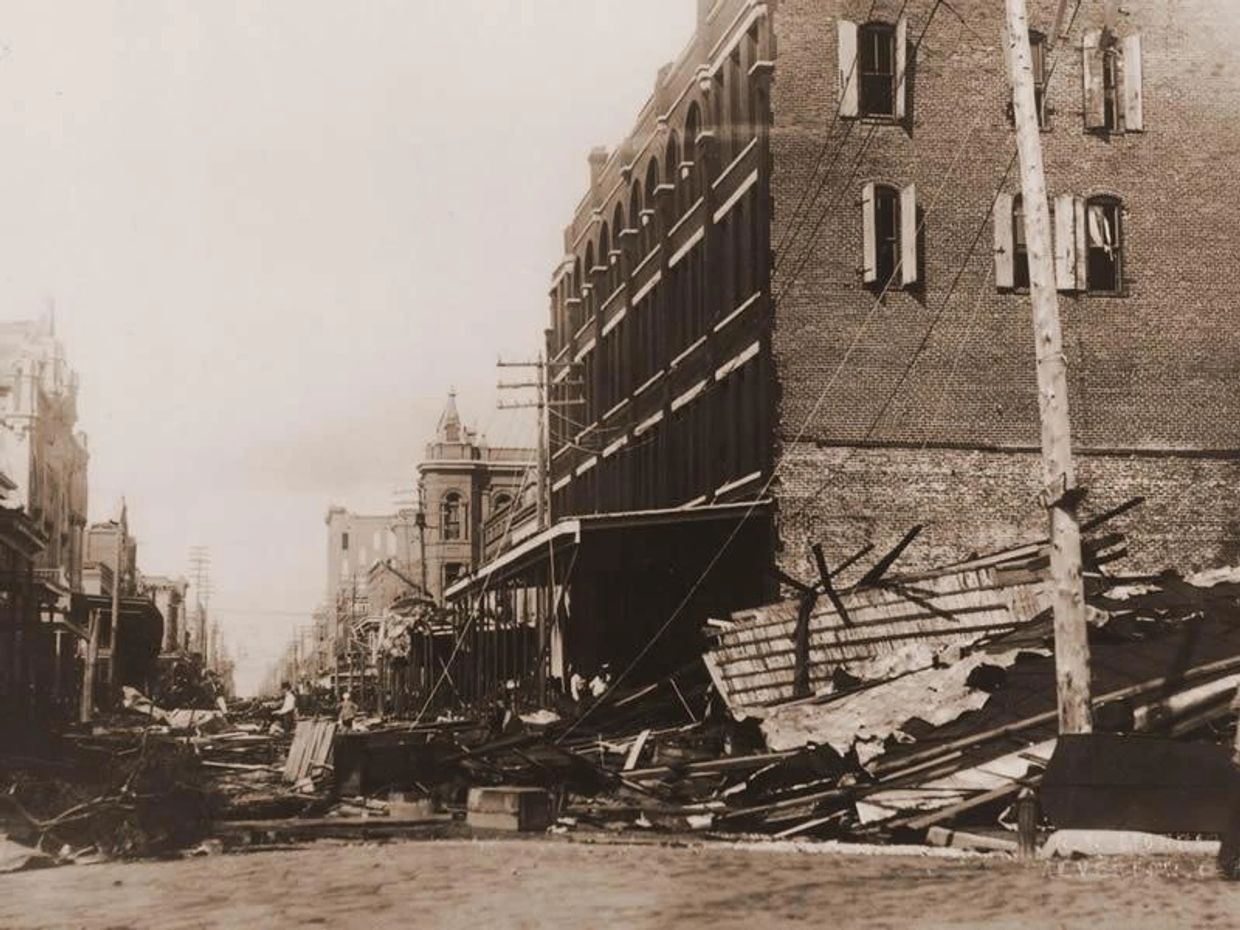
As the hurricane moved across the Island, powerful winds and an estimated 15-foot storm surge pushed Gulf waters over Galveston. Homes were lifted from their foundations, buildings collapsed, and debris carried by the water created a massive wall of wreckage that destroyed structures in its path. Communication with the mainland was lost, leaving residents with little way to understand the full scale of the disaster as it unfolded.
By the time the storm passed, large portions of Galveston had been devastated. Thousands of buildings were damaged or destroyed, and an estimated 6,000 to 8,000 people lost their lives. Thousands more were left without homes. The destruction was so extensive that the storm permanently altered the future of a city that had once been competing to become one of the Gulf Coast's leading commercial centers.
Rebuilding & Raising the Island
In the aftermath, Galveston responded with one of the most ambitious engineering projects of its time. Construction began on a massive seawall to protect the city from future storm surge, while large portions of the Island were physically raised to a higher elevation. Buildings were lifted on jacks, utilities were raised, and millions of cubic yards of sand were pumped beneath neighborhoods to increase the city's grade.
The recovery reshaped Galveston both physically and economically, but the Island endured. Many historic homes and buildings survived the storm and the enormous rebuilding effort that followed. More than a century later, the Seawall, raised neighborhoods, and surviving architecture remain lasting reminders of Galveston's resilience and one of the most remarkable chapters in the Island's history.
Architecture That Tells a Story
Historic Commercial Buildings
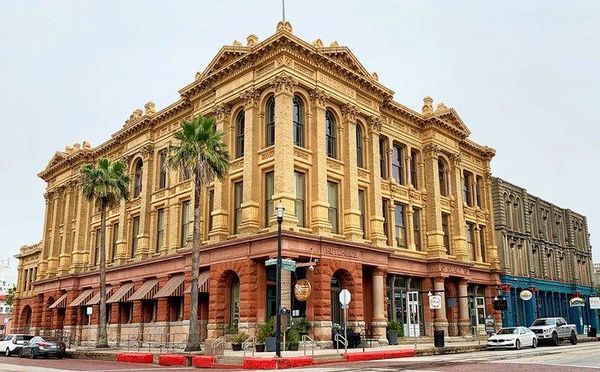
Built in 1895, the Hutchings, Sealy & Co. Buildings are a striking example of Renaissance Revival architecture and a reminder of the era when The Strand was known as the “Wall Street of the Southwest.” Designed by renowned Galveston architect Nicholas J. Clayton, the property was actually constructed as two individuals but connected buildings for the banking and business operations associated with John Henry Hutchings and John Sealy.

Victorian / Château Esque Architecture
Built between 1887 and 1892, Bishop’s Palace, originally known as the Gresham House, is one of Galveston’s most celebrated historic landmarks. The home was designed by architect Nicholas J. Clayton for prominent attorney and politician Walter Gresham and his family.
Bishop’s Palace also has an important connection to the Great Storm of 1900. The massive home survived the hurricane and reportedly provided shelter to people in the surrounding area during the disaster. In 1923, the Roman Catholic Diocese of Galveston purchased the property, and it later became the residence of Bishop Christopher E. Byrne, giving the landmark the name Bishop’s Palace that remains today.

Victorian/Queen Anne
One of the most recognizable sights in Galveston’s historic neighborhoods, Victorian homes brought elaborate craftsmanship and character to the Island during its prosperous late-19th-century years. Queen Anne–influenced homes are known for their asymmetrical designs, dramatic gables, expansive porches, decorative woodwork, and intricate “gingerbread” details. Many of these homes remain an important part of Galveston’s architectural identity today.
Greek Revival
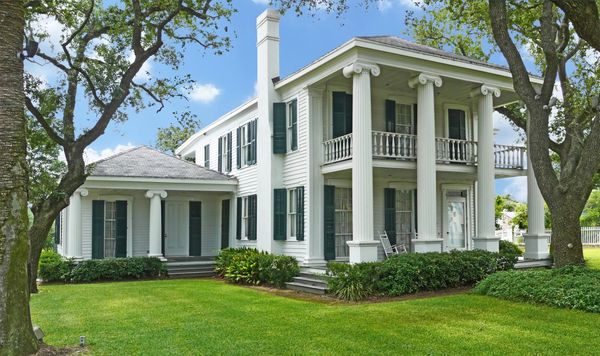
Popular in Galveston during the mid-1800s, Greek Revival architecture is known for its symmetry, classical columns, tall windows, and wide porches. The style was adapted to Island life with large openings and shaded galleries that encouraged airflow in the coastal climate. The 1838 Michel B. Menard House, Galveston’s oldest surviving residence, is a beautiful example of the style.
Galveston Cottage/Raised Cottage
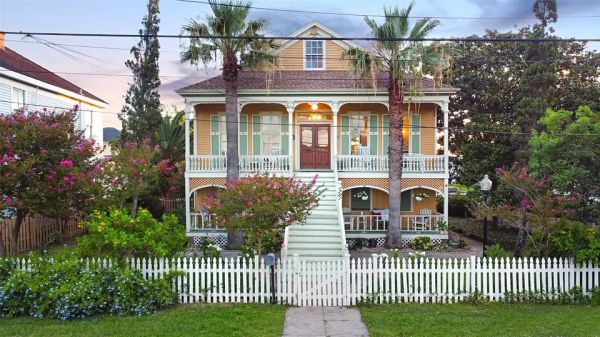
One of the Island’s most recognizable residential styles, the Galveston cottage is typically a modest one- or one-and-a-half-story wood home built on a pier-and-beam foundation. Many feature front porches, dormer windows, tall ceilings, and raised construction that helped homes adapt to Galveston’s heat, airflow, and risk of flooding. These cottages were especially common among working families and remain an important part of the character of Galveston’s historic neighborhoods today.
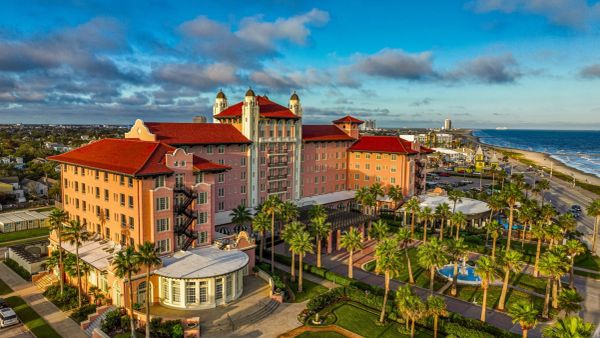
Misson Revival
Mission Revival became popular in Galveston in the early 1900s, bringing a distinctly different look from the Island’s Victorian architecture. Inspired by early Spanish missions, the style is recognized by smooth stucco walls, curved parapets, arched openings, wide overhanging eaves, and red clay tile roofs. One of Galveston’s most prominent examples is the Grand Galvez, which opened in 1911 and became a symbol of the Island’s recovery following the Great Storm of 1900.
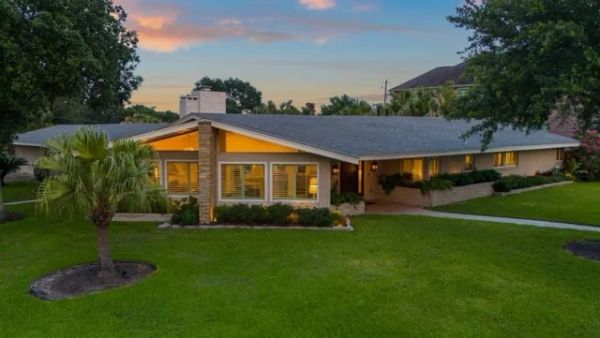
Mid-Century Modern
Galveston’s architecture continued to evolve after the Victorian era, with Mid-Century Modern homes appearing during the postwar years. Known for clean lines, low rooflines, large windows, open floor plans, and a strong connection between indoor and outdoor spaces, the style brought a distinctly modern look to the Island. A standout Galveston example is the 1951 Sam and Edna Maceo House in Cedar Lawn, designed by the same Palm Springs architectural firm connected to Frank Sinatra’s famous Twin Palms home.
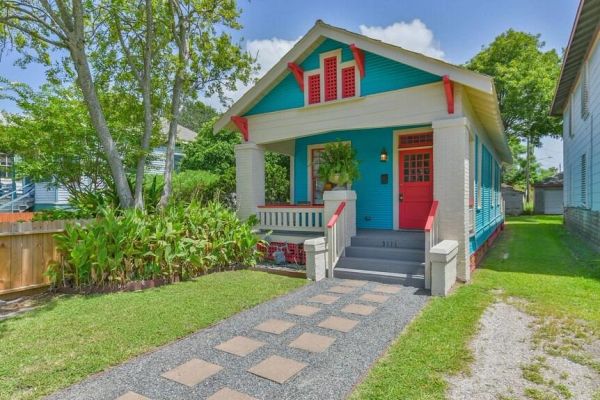
Craftsman/Bungalow
Craftsman bungalows became popular throughout Galveston from the 1920s through the 1940s, adding a simpler, more relaxed style to the Island’s neighborhoods. These homes are easy to recognize by their low-pitched roofs, wide overhanging eaves, exposed rafters, sturdy porch columns, and large front porches. Many Galveston examples were also elevated to better suit coastal living, and they remain especially common in historic neighborhoods and areas west of 33rd Street.
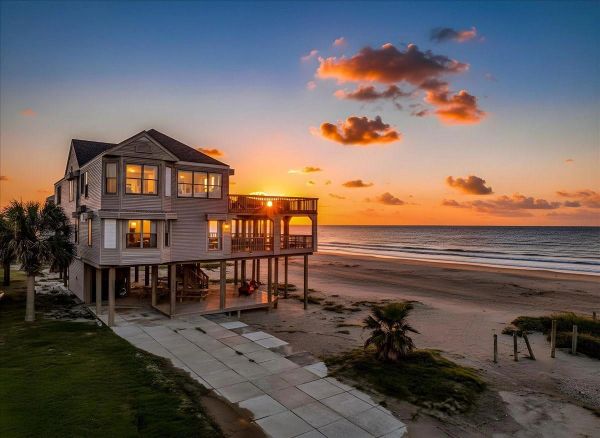
Beach House/Coastal
Perhaps the most recognizable style of modern Galveston living, coastal beach houses are designed with the Gulf environment in mind. Often elevated on pilings, these homes feature expansive decks, large windows, open living spaces, and covered outdoor areas that take advantage of Gulf breezes and water views. Found throughout the West End and Galveston’s beach communities, the style reflects how Island architecture continues to adapt to coastal living today.